
The first-ever sequel from Supergiant Games arrives with the impossible task of following a masterpiece with Hades II.
In many ways, Hades II is a victory lap for a studio that has mastered the art of the loop.
It is a game built on the sturdy bones of its predecessor. Sharing the same swift-pen art style, stunning soundtrack, and that signature sock-clad glide over polished parquet floors.
But as Melinoë takes the lead from Zagreus, the experience shifts from a story of rebellious self-discovery to one of dark sorcery and duty.
A Technical Masterclass in Iteration
From a mechanical standpoint, Hades II is undeniably superior to the original in every measurable way.
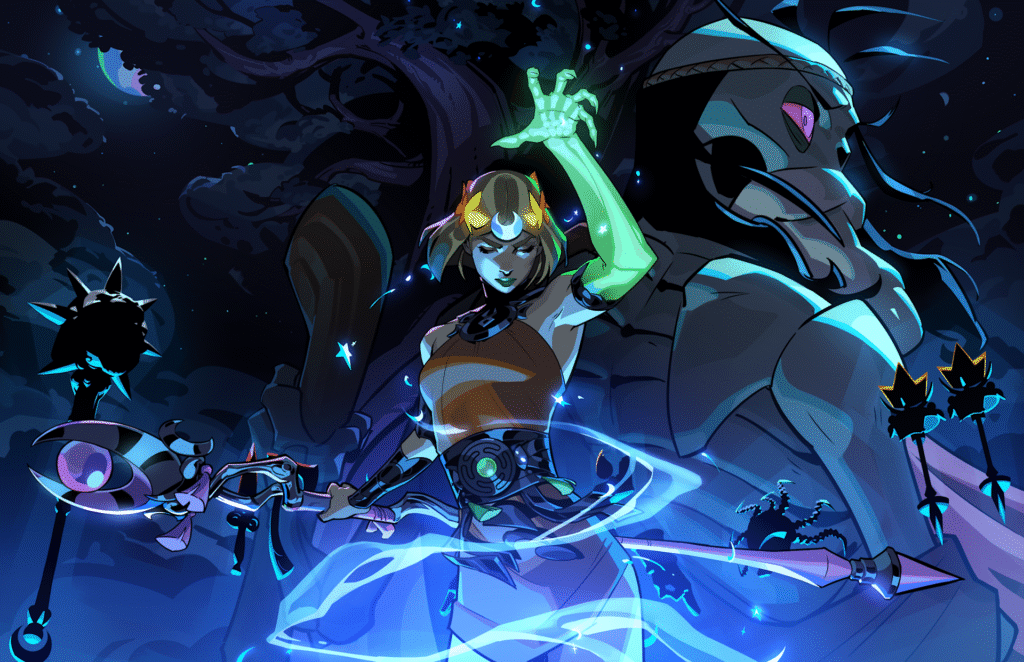
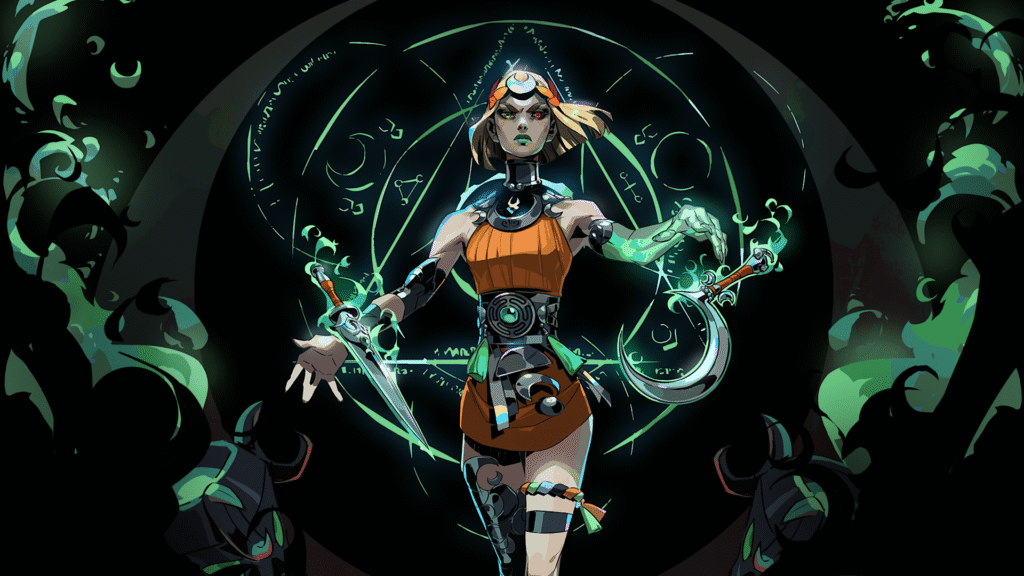
Melinoë is a devastating protagonist. With her witch’s staff and Sister Blades giving a versatility that allows for more complex build-crafting.
The resource gathering is more involved. The environments are broader. The loop of returning to the Crossroads, to stir the cauldron or consult the Arcana cards provides a much richer progression.
It’s just a more polished, expansive, and technically accomplished experience.
The Witch and the Titan of Time
The narrative of Hades II centres on a far more somber premise than the original.
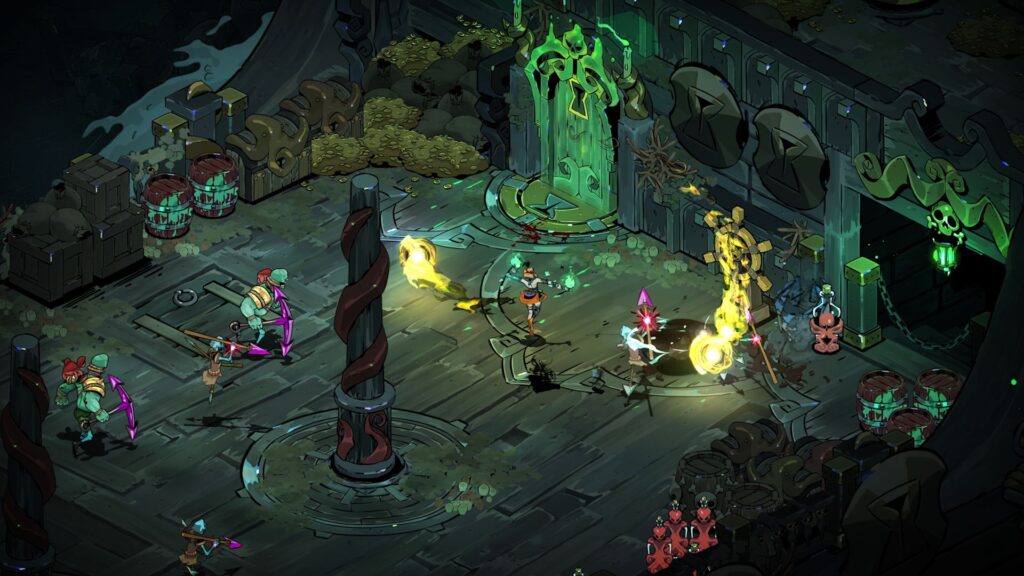
Melinoë, was whisked away as an infant when Chronos, the Titan of Time, overthrew the House of Hades and imprisoned her family.
Unlike her brother Zagreus, who sought escape from a stifling home. Melinoë is fueled by a cold and disciplined desire for vengeance.
Raised and trained at the Crossroads by Hecate, the formidable Headmistress and Goddess of Witchcraft. This mentor/student dynamic provides a stern, maternal backbone to the story. Which contrasts sharply with the chaotic parental bickering of the first game.
The cast of characters at the Crossroads adds weight to Melinoë’s mission.
You have Nemesis, the brooding personification of Retribution, who resents Melinoë for being the chosen one to face Chronos. Odysseus, the veteran tactician of the Trojan War, who provides a grounded, weary perspective on the brewing conflict.
Even the Olympian gods feel more desperate this time. They are locked in a direct war with the Titan’s forces.
As is to be expected, these interactions are beautifully written. Still reflecting a world that is much darker and more pressurised than the one we previously inhabited.

Magick and the Omega System
The most transformative addition to the gameplay is the Magick system.
Unlike the straightforward cooldowns or ammunition of the past, Melinoë possesses a mana bar that fuels her Omega moves.
By holding down the attack, special, or cast buttons, players can channel Magick to unleash empowered versions of their abilities.
This turns every weapon into a multi-functional tool, allowing for a tactical approach, where you must balance positioning with the time needed to charge a powerful blast.
The Cast has also been completely reimagined, too! No longer a simple projectile, it is now a binding circle that traps enemies in place. It offers a level of battlefield control that Zagreus never possessed. It ties-in with the witchiness of it all.
When combined with the new Arcana Card system, which replaces the Mirror of Night, the customization becomes incredibly deep.
You manage a Grasp limit to equip cards that provide passive buffs. This allows you to tailor your stats and abilities to a specific playstyle before you even step into a run.
Expanded Progression and Gathering
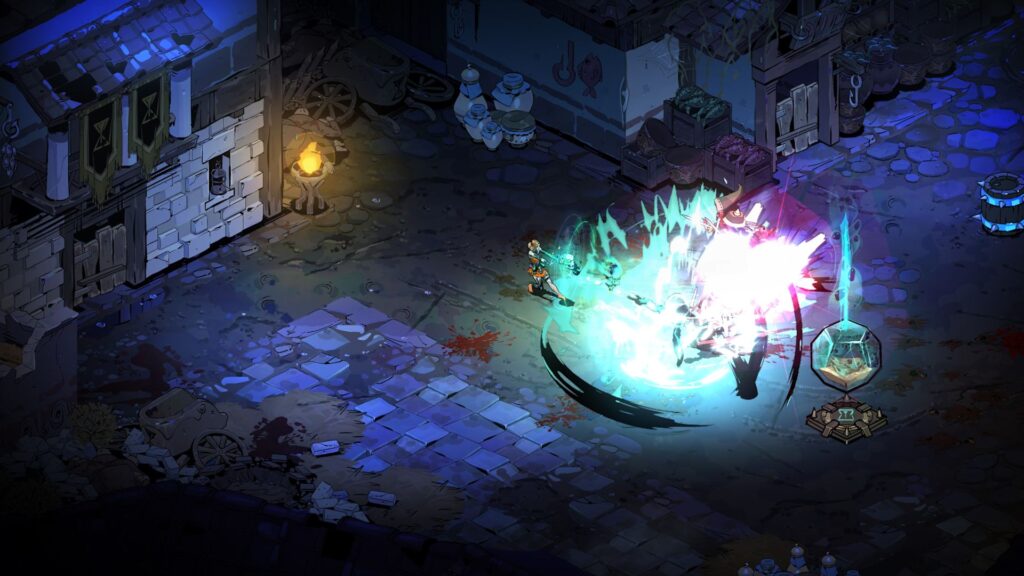
Progression in the Crossroads feels more tangible thanks to the introduction of the Cauldron and various gathering tools.
Players can now bring a Crescent Pick to mine silver or a Silver Spade to dig for seeds, which are then used in the hub to perform Incantations.
These are world-altering spells that do everything from unlocking new NPCs to creating survival wards that allow Melinoë to explore the surface.
This loop of harvesting and brewing makes every failed run feel productive. I’d go so far as to say, this is the single best improvement for me. You’re constantly bringing back the ingredients needed to fundamentally change the game world.
The Burden of the Pioneer
However, there is a specific kind of magic that is harder to conjure a second time.
While Hades II is the better-built machine, it does not feel as groundbreaking or genre-shattering as the first game did upon its arrival.
The original Hades was a revelation that redefined how narrative could be woven into the roguelike structure.
This sequel, while executing those same ideas with more grace and scale, feels like it is operating within a framework that has already been perfected.
It is a brilliant expansion of a known quantity rather than the seismic shift that changed the landscape of the genre back in 2020.
Still exceptional by every measure, but it just doesn’t have that magic that you got playing the first one.